Original public course description
Characterization and restoration of contaminated sites
Recovered lesson sections
- Characterization and restoration of contaminated sites
- Teaching section 1
- Επισκόπηση νομοθεσίας
- Εμπειρίες από το ξεκίνημα της νομοθεσίας
- Σχετικό υπόβαθρο
- Διαδικασίες – περιστατικά
Full surviving teaching outline
Characterization and restoration of contaminated sites
Χαρακτηρισμός και Αποκατάσταση Ρυπασμένων Χώρων
- Ατζέντα PDF document
- Communication Point:
- Announcements Forum
Χαιρετισμοί
- Χαιρετισμός του Γενικού Γραμματέα του Υ.ΠΕ.ΧΩ.Δ.Ε. Word document
Επισκόπηση νομοθεσίας
- Εθνική νομοθεσία για χώρους ρυπασμένους με επικίνδυνα απόβλητα Powerpoint presentation
- Επικείμενη κοινοτική νομοθεσία για την προστασία του εδάφους Powerpoint presentation
Εμπειρίες από το ξεκίνημα της νομοθεσίας
- Περιστατικά από διαφορετικές περιφέρειες Powerpoint presentation
Σχετικό υπόβαθρο
- Πρόβλεψη εξέλιξης ρύπανσης Powerpoint presentation
- Αποτίμηση διακινδύνευσης: Εργαλείο αποφάσεων Powerpoint presentation
- Χαρακτηρισμός ρυπασμένων χώρων Word document
- Αναλύσεις δειγμάτων εδάφους και νερού Powerpoint presentation
- Μέτρα και τεχνολογίες αποκατάστασης Powerpoint presentation
Διαδικασίες – περιστατικά
- Με ευκαιρία συγκεκριμένα περιστατικά, αναλύεται η διαδικασία από τη στιγμή που θα προκύψει ο χώρος έως την αποκατάστασή του
- Διαδικασία χαρακτηρισμού – αποκατάστασης χώρων Powerpoint presentation
- Παράδειγμα ρυπασμένου χώρου: Υπαίθρια αποθήκη ηλεκτρολογικού εξοπλισμού Powerpoint presentation
- Η διαδικασία χαρακτηρισμού - αποκατάστασης με παράδειγμα Powerpoint presentation
- Μεταλλεία Αμιάντου Βορείου Ελλάδας: έργο αποκατάστασης σε εξέλιξη Word document
What is available here?
This is the historical public course record. It does not include an active enrolment, certificates, quizzes or access to private course areas. Activity names and handout references are retained as text; their unarchived files are unavailable. The specific source captures show the original course listings.
Continue learning
Explore the 12 complete module syllabi, try the water balance lab or browse the recovered document library.
Before a sample: write the question the data can answer
This modern desk exercise complements the historical course above. It is not a reopened course, a field-safety procedure or advice to collect water from a contaminated site. Actual sampling requires qualified planning, permissions and suitable methods.
- Write a bounded question: which water, which place, which period and which measured property? Replace “Is the groundwater safe?” with a question a defined dataset can address.
- List the comparison and information needed: site identifier, sampling interval, units, method, laboratory reporting limit and quality-control notes. Missing metadata remain missing.
- Decide how a non-detect, an unmatched method or an unknown sampling depth will be treated before looking at values. A non-detect is not a measured zero.
- State the conclusion boundary. Two observations do not describe an entire aquifer or establish a source of contamination.
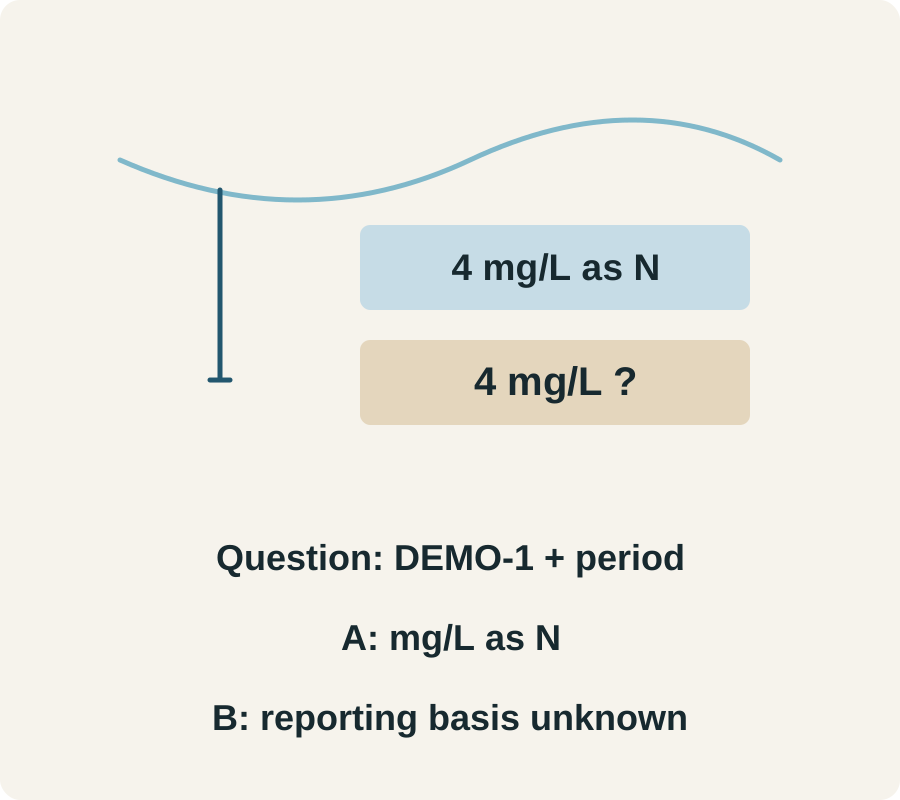
Fictional design: “Do comparable existing records for monitoring point DEMO-1 show a difference in reported nitrate concentration between two specified months?” Record A is 4 mg/L nitrate as nitrogen; record B says 4 mg/L nitrate but omits the reporting basis. They are not yet comparable. Do not calculate a trend, merge units or invent the missing basis. Obtain the original laboratory explanation first.
Desk worksheet: decision __; location/depth __; period __; property/reporting basis __; unit __; method __; detection/reporting limit __; comparison rule __; missing fields __; conclusion allowed __. The USGS National Field Manual supplies professional methods and training context; this worksheet only helps identify what to ask before interpreting data.
Source: www.usgs.gov.